Three Scenarios for a Post-Coronavirus World
March 1, 2021As the COVID-19 crisis is gradually slowing down, the world is bracing itself for a very likely second wave of the pandemic. While the shortcomings of the global response and the preparedness of individual countries will be open for debate and analysis for a long time to come, attempting to forecast what architecture the international system will assume after the immediate health crisis is over may prove to be even more challenging. While experts offer a wide variety of perspectives, the debate on the post-coronavirus world is characterized by some recurring themes, such as the future of globalization, the fraught relationship between the United States and China, the challenges facing the European Union or the future role of populism and the radical right.
Vittorio Emanuele Parsi, professor of international relations at the Catholic University of Milan and author of “The Vulnerable: How the Pandemic Will Change the World,” proposes three possible alternative scenarios on the international system after COVID-19. Two are rather gloomy, with the international order characterized by a cynical return to “business as usual” or a turn toward self-centered nation-states, ruled by populist, nationalist leaders. A third scenario does give some hope, provided we recognize and effectively protect the most vulnerable members of our societies that form the most fragile part of the system.
The Deadly Disorder Behind COVID-19 and Police Violence
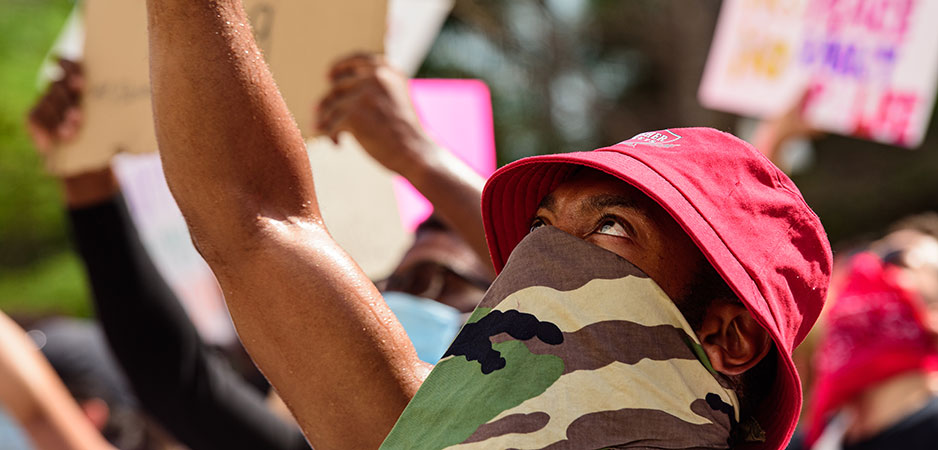
For Parsi, the real turning point for understanding what a post-pandemic international system may look like is the upcoming presidential election in the United States. Currently, both the ongoing pandemic and the countrywide protests following the death of George Floyd, an unarmed black man, at the hands of Minneapolis police, dramatically demonstrate how the most vulnerable elements of society are the most exposed and the least protected. If the US government fails to effectively protect its citizens from both the health threat posed by COVID-19 as well as its socioeconomic fallout, the result will be catastrophic, with a consequent redistribution of power domestically that will echo at the international level.
In this guest edition of The Interview, Valerio Alfonso Bruno talks to Professor Vittorio Parsi about the possible state of the post-pandemic world and the various vulnerabilities COVID-19 has exposed within the existing system.
The text has been edited for clarity.
“
I like the image of the vessel, and I used it in previous books as well. The vessel represents our globalized world. It is important that we start considering ourselves as a crew, being a part of the very same vessel while navigating the oceans. It is important to understand that this vessel cannot be replaced, it is the only one that we have. The vessel is vulnerable, and the crew is its most vulnerable element. If there is no solidarity among the members of the crew or its security is at risk, there is no future and no sailing.
For a long time, we have considered, erroneously, the vessel as safe and invincible, and the safety of the crew as a “cost” to be squeezed, only to find out lately that nobody was actually at the rudder and that it was in a rather bad condition. Now, the catastrophic event of the COVID-19 pandemic suddenly requires that mankind, as the members of the crew, learns from its mistakes and takes on the responsibility of our world by leading the vessel. We should never forget that a vessel is conceived, built and operated from the awareness that its crew is vulnerable. After all, what is a vessel without its crew? A ghost ship.
I do consider the use of images and metaphors to be important in helping us understand the reality we are living, but it is important not to fall into anachronisms, being tempted to link completely different historical contexts. Images and metaphors can be extremely useful, but their danger lies exactly in the risk of being carried over and ultimately lost during the transfer between the two terms put in contact by the image.
Exactly, I mean precisely to return to the “business as usual,” as nothing had happened. Globalization will resume its wild ride, however, with an increased number of the poor and the discontented, proposing again a now more than ever precarious and unstable process, with the US and China continuing their geopolitical confrontation for the global leadership, and the European Union keeping its marginal role. In particular in the EU, the domestic institutional settings of the member states will see an increased role of technical bodies and authorities, leaving less and less space to the participation of citizens to the public debate. As with the Congress of Vienna and the Restoration of 1815, this attempt will eventually show its limit to appear as an illusion.
If the impact of COVID-19 will be heavy, limiting international trade and the economic interdependence based on the current global value chains, then national-states will see their relevance growing again. The international system will be fragmented into several different areas of economic and political influence, substantially closed to each other. There will be no countries capable of expressing global leadership, with a relative decline of the United States and a proportionate rise of China. The European Union may fall apart, under the blows of nationalist, populist and radical-right parties that successfully mobilize a growing number of citizens.
Let’s make it clear: The pandemic is a huge, devastating defeat, which caught the world completely unprepared. But as I said, we should learn from our mistakes, as in every crisis there is an element of change and improvement — if we are able to recognize and grasp it. Historically, mankind has been able to rise stronger and more equal after catastrophic events, also in recent times, such as the crisis of 1929 and World War II. This could be a good occasion to build a more fair society by reconciling politics and economics, democracy and the free market. The European Union in particular may see the post-pandemic [period] as a possibility to relaunch the integration project by supporting member states hit more severely by the virus, such as Italy and Spain.
In order to achieve a real renaissance, a change in our behavior is paramount, a change based on the awareness that the fight against the coronavirus was a collective effort. This is the real lesson we got from the pandemic.
I believe the irresponsibility, the insensibility but also the carelessness expressed by [President Donald] Trump’s statements do concur in fueling violence. On one hand, this clearly signals that a change of leadership at the White House is necessary. On the other hand, it is also revealing of how far this president can go in order to keep power. He is fueling a war against the American people — the same people he vowed to defend, together with the Constitution. Trump’s game is clear: focusing on chaos and on the fear of chaos in order to hide the continuous slaughter provoked by his bad management of COVID-19, fueling the internal divisions of American society to avoid a united common front against his politics. .
Yes, at least two. The first one is the role of unfairness and inequality. The pandemic has hit everybody, but not in the same way. African Americans and Hispanics, and people on low incomes, paid the highest prices to the virus. In the Bronx, the mortality of the pandemic was double that of Manhattan. Similarly, the chances that an African American may become a victim of violent behavior by the police are definitely higher than for a white person.
The second connection has to do with the Trump presidency itself. The unfit management made the consequences of the pandemic worse, just as with the consequences of Floyd’s murder. Not only that: The president fanned the flames of the protests to provoke a rally- around-the-flag effect in his electoral base around the fear of violence by the protesters. Trump is trying to make people forget about his responsibility in the disastrous management of the pandemic. What is most striking is the ruthlessness and the cynicism this president is using to jeopardize the US constitutional order to win reelection.
Either in an exceptional event (the pandemic) or a tragic, although common, practice (unprovoked police violence), if you are “expendable” — a black person, a Hispanic, an outcast at any level — your life is worth less than the lives of others. The injustice and the inequality discriminate always and in every case. Not only can’t the system to protect them from threats, but the system itself is a threat. What to some sounds as “law and order,” for others is “caprice and violence.” Paradoxically, the rhetoric of “we will win together against the virus,” recalling the unity of the society against the pandemic, was dramatically and suddenly denied by the usual divisions within the country. Disillusionment is a powerful accelerator.